This chapter takes the opposite view, that the brain must be seen as a biological organ to understand some of its key properties. A computational view won’t capture the complexity and diversity of the physical solutions that enable nervous systems to drive behaviour. Under strong evolutionary selection, behaviours that are key to survival are built into the ancient structures of the limbic system, midbrain, and brainstem. These behaviours are often influenced by levels of hormones, such as testosterone, vasopressin, oxytocin, and cortisol, with widespread modulation and biasing of brain and body systems. We take a deeper dive into four areas of what the brain does that sit less easily with the idea of computation: sleep, circadian rhythms, stress, and the search for love. In each case, we tag the ancient structures involved, the role that neurotransmitters play, the role that hormones play both inside the brain and outside conditioning the body, and the side effects that play out in the cortex. Here are some of the key bits of evidence we use:
- ‘The moon jelly Aurelia aurita can propel itself by contracting its bell to expel water‘ – Evidence on how the moon jellyfish steers: Pallasdies F, Goedeke S, Braun W, Memmesheimer RM. From single neurons to behavior in the jellyfish Aurelia aurita. Elife. 2019 Dec 23;8:e50084. doi: 10.7554/eLife.50084. PMID: 31868586; PMCID: PMC6999044.
- Here’s what happened when we asked the generative AI system DALL:E to produce a picture of a moon jellyfish performing a calculation on a computer…

- ‘Take sexual behaviour, which we think you’ll agree, feels not particularly computational. Out in the body, sexual events for males and females alike involve…’ – The physiological responses involved in the sex act, from: John D. Stewart (2004). Sexual Function. In: David Robertson, Italo Biaggioni, Geoffrey Burnstock, Phillip A. Low (Eds.). Primer on the Autonomic Nervous System (Second Edition) (p. 116-117). Academic Press. https://doi.org/10.1016/B978-012589762-4/50029-3.
- ‘Sexual behaviour is driven by the medial region of the appetitive limbic structure, the amygdala‘ – The involvement of the amygdala in sexual behaviour, see: Patty T. Huijgens, Roy Heijkoop, Eelke M.S. Snoeren (2021). Silencing and stimulating the medial amygdala impairs ejaculation but not sexual incentive motivation in male rats. Behavioural Brain Research, Volume 405, 7 May 2021, 113206. https://doi.org/10.1016/j.bbr.2021.113206
- Here’s another example of the diversity and complexity of neural activity in driving behaviour, one that didn’t make it into the final text (because we had too many examples). In this case, we look at how the Hawk moth controls the beating of its wings. Should a moth wish to extract nectar from a flower head that is dancing in the wind, impressive aerobatic manoeuvres will be required. Its fast-beating wings must align its body with the flower head and compensate for any perturbations in the air flow. How does its brain control the muscles driving the wings to deliver this symphony of precision? This is a problem faced by any species that must deliver fast movement with potentially complex structured limbs in an unpredictable environment – such as, say, a human on a cross-country run. There are at least three ways the motor neurons might talk to the muscles. They might signal required contractions by the size of the action potential spikes. Big spikes for strong movements. They might signal through the rate of firing of the neurons, where muscle force is proportional to the firing rate of the motor neuron. Or the key information might involve the timing of the firings, when the spikes come. The Hawk moth has just five muscles to control each wing, and relatively few motor neurons to drive each muscle. This is a simple enough system that the signal reaching every muscle can be measured while the Hawk moth is in flight around the flower, to reveal the entire motor program the moth’s brain is using to control its wings. It turns out that it is precise timing, at the level of milliseconds, within rapid sequences of neural signal spikes that is key to controlling the flight muscles, rather than the number or size of the spikes. This is a solution that fits with the size of the moth’s wings and their frequency of beats. By contrast, fruit flies use another solution, with mixed functional groups of occasionally active and always active flight muscles that drive their wing beats at 10 times the speed of the moth’s. Different species exploit different properties of their nervous systems to deliver similar behaviour, because of the different physical requirements and capabilities of their bodies. See: Joy Putney, Rachel Conn, and Simon Sponberg (2019). Precise timing is ubiquitous, consistent, and coordinated across a comprehensive, spike-resolved flight motor program. PNAS, 116 (52) 26951-26960. https://doi.org/10.1073/pnas.1907513116
- Here and below are a handful of quotes that nicely illustrate the debate on whether the brain should be seen as performing computation. The first quote is a tweet, from a blogger called “Neuroskeptic” @Neuro_Skeptic, who rejects a (naïve) interpretation that brain is just like a digital computer: Does anyone really think that the brain is “a computer”? I see a lot of “brain’s not a computer” articles, and it feels like they’re attacking a strawman. I saw one recently that pointed out “there are no binary codes in our brain”. Has anyone ever believed there were?
- The second quote is from Rodney Brooks, a professor of robotics, arguing in 2014 that the ‘computational metaphor’ is ready for retirement, because it restricts interpretations, and does not embrace the diversity of physiological solutions that nervous systems use to drive behaviour across different species. He says: The power of computation, and computational thinking is immense, and its import for science is still in its infancy. But it is not always helpful to confuse computational approximations with computational theories of a natural phenomenon… When it comes to explaining the brain, and simpler neural systems, the computational metaphors have taken over, and it is easy to find both language and claims about computation. As one example, we see people talk about neural coding—what is it that is coded in the spike train running along an axon over time? But early neurons evolved to synchronize muscle activity better. For instance, jellyfish swim much better if all their swimming muscle activates at once so that they go straight, rather than wobble, and evolution found multiple solutions in different species for this problem … Furthermore, in many jellyfish there are multiple neural systems based on different propagation chemistries for different behaviors, and even for different modes of swimming … Thinking of neurons in these simple systems as computational systems sending “messages” to each other, is not the best way for describing the behavior of the system in its environment. The computational model of neurons of the last sixty plus years excluded the need to understand the role of glial cells in the behavior of the brain, or the diffusion of small molecules affecting nearby neurons, or hormones as ways that different parts of neural systems affect each other, or the continuous generation of new neurons, or countless other things we have not yet thought of … I suspect that we will be freer to make new discoveries when the computational metaphor is replaced by metaphors that help us understand the role of the brain as part of a behaving system in the world. I have no clue what those metaphors will look like, but the history of science tells us that they will eventually come along.
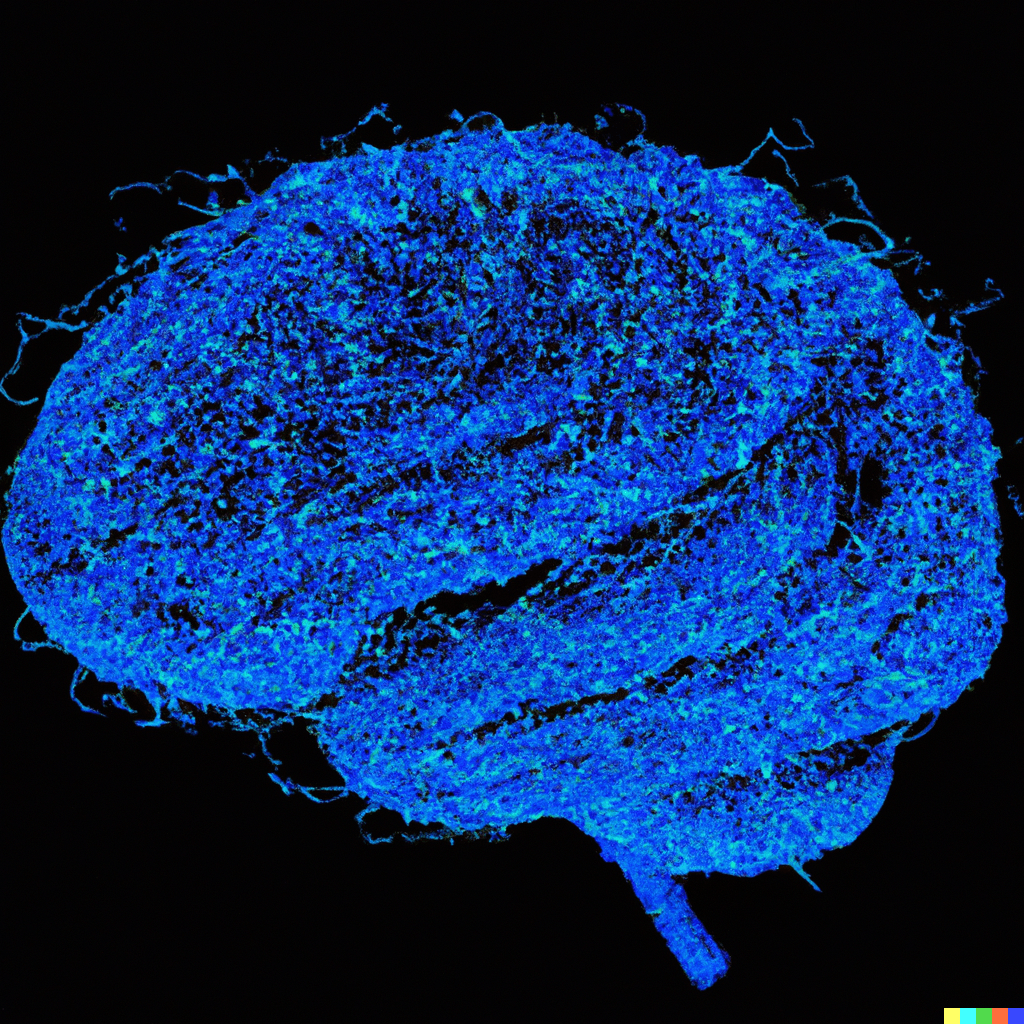
- At this point, we got distracted and asked DALL:E to generate an image of a big blue brain with lots of neurons very busy carrying out lots of detailed computations…
- The third quote is from cognitive neuroscientist Christof Koch, who studies, among other things, the neuroscience of consciousness. Koch argues that a broader notion of computation remains an extremely useful view of what the brain does. He says: The brain computes! This is accepted as a truism by the majority of neuroscientists engaged in discovering the principles employed in the design and operation of nervous systems. What is meant here is that any brain takes the incoming sensory data, encodes them into various biophysical variables, such as the membrane potential or neural firing rates, and subsequently performs a very large number of ill-specified operations, frequently termed computations, on these variables to extract relevant features from the input. The outcome of some of these computations can be stored for later access and will, ultimately, control the motor output of the animal in appropriate ways. (Christof Koch, Biophysics of Computation).
Sleepy Yet?
- ‘Sleep can seem pretty straightforward‘ – Our knowledge of the behavioural, cognitive, neurophysiological, neuropharmacological and genetic aspects of sleep has expanded exponentially over the last 30 or so years. From seeing sleep as ‘what the brain does when nothing is going on outside’ it is now conceptualised as a complex mix of all those processes just mentioned, with a range of functions, from behavioural adaptation to cleaning the brain. Sleep – or some thing like it – is seen across the animal kingdom, from jellyfish to the sloth to us (Trojanowski, N.F. & Raizen, D.M. (2016) Call it worm sleep. Trends in Neurosciences, 39(2), 54-62. https://10.1016/j.tins. 2015.12.005; also see Nath, R.D. et al., 2017. The jellyfish Cassiopea exhibits a sleep-like state. Current Biology, 27, 2984-2990. http://dx.doi.org/10.1016/j.cub.2017.08.014 ). Zimmerman et al., 2008, provides a detailed analysis of sleep in non-mammalian species (zebra fish, fruit flies, roundworms etc), and how genetic, molecular and neurotransmitter mechanisms have been highly conserved over evolution (Zimmerman, J.E., Naidoo, N., Raizen, D.M. & Pack, A.I. (2008) Conservation of sleep ! Insights from non-mammalian model systems. Trends in Neurosciences, 31(7),371-376. https://doi.org/10.1016/j.tins.2008.05.001)
- Although rather dated in some areas, the book by Stanley Coren (Sleep Thieves; 1996) is an excellent and readable summary of the history of sleep research up to the 1990s (Coren, S. (1996) Sleep Thieves. New York: Free Press)
EEG patterns, stages, and the sleep cycle
Stages of sleep
REM and the sleep cycle
- Detailed figures and description of the EEG stages of sleep and the alternation between NREM and REM sleep can be found in any of the larger texts (e.g. Breedlove & Watson, 2017. Behavioral Neuroscience, 8th ed. Sinauer; Freberg, 2019. Discovering Behavioral Neuroscience, 4th ed. Cengage). A very detailed account of the EEG stages can be found in Dijk, 2019. (Dijk, D-J. (2019) Regulation and functional correlates of slow-wave sleep. Journal of Clinical and Sleep Medicine, 5 (2 Supplement), S6 – S15. https://doi.org/10.5664/jcsm.5.2S.S6). The reviews of sleep functions referenced in later sections will refer to the different stages of sleep.
Functions of sleep
The ecological approach – sleep as adaptation to the environment
- ‘Various reviews of sleep across the animal kingdom allow for some generalisations on sleep patterns‘ – You only have to see a David Attenborough documentary showing wildebeest sleeping on the open savannah while the rest of the herd stand around as a protective shield to make some basic observations about sleep. It is necessary, otherwise why leave yourself vulnerable to predation ? Secondly, it is safer to sleep up a tree than on the savannah. Lesku (2008) reviews sleep patterns across an extraordinary range of species (around 80…) and draws out a range of conclusions (though all have some exceptions). Increases in body mass and brain mass are associated with decreased NREM sleep, while increased encephalisation (increase in neocortical size) links to increases in amount of REM sleep. Riskier sleep niches correlate with decreased sleep time and REM in particular. Dolphins may be the ultimate example. If they sleep, then they increase the chances of drowning. So they sleep with one hemisphere are a time, so they are continually alert (see Mukhametov et al., 1977 – how do they know? By studying bottlenose dolphins in a confined swimming area, using implanted electrodes to record EEG activity).
- Siegel (2022) reviews sleep functions in an evolutionary context, comparing sleep in hunter-gatherer groups with sleep in modern industrial societies. Hunter-gatherers have less insomnia (sleeping less than the norm of seven hours), emphasising the importance of ecological niche, while reviewing the effects of sleep deprivation across species and the physiology of sleep leads Siegel to conclude that REM sleep is important for temperature regulation (this is poor in NREM). Another aspect of sleep functions…
- Studying sleep in animals is difficult, and usually in the artificial conditions of the zoo. To demonstrate the importance of this, Rattenborg et al., 2008, found that the three-toed sloth sleeps for 9.63 hours in its rain forest home, around 6 hours less than in the zoo…
- Lesku, J.A., Roth II, T.C.,Rattenborg, N.C., Amlaner, C.J. & Lima, S.L. (2008) Phylogenetics and the correlates of mammalian sleep: A reappraisal. Sleep Medicine Reviews, 12, 229-244. https://doi.org/10.1016/j.smrv.2007.10.003
- Mukhametov, L.M., Supin, A.Y. & Polyakova, I.G. (1977) Interhemispheric asymmetry of the electroencephalographic sleep pattern in dolphins. Brain Research, 134, 581-584.
- Rattenborg, N.C., Voirin, B. & 6 others (2008) Sleeping outside the box: Electroencephalographic measures of sleeping sloths. Biology Letters, 4(4), 402-405. https://doi.org/10.1098/rsbl.2008.0203
- Siegel, J.M. (2022) Sleep function: An evolutionary perspective. Lancet Neurology, 21, 937-946
Sleep as restoration
- ‘The correlation between animal size, metabolic rate, and extended sleep suggests that sleep in these animals helps in conserving energy. But this is a passive element. Does sleep help in actually restoring brain and body?‘ – We feel tired after sleep deprivation, and better after catching up (this is ‘sleep homeostasis’; see Borbely et al., 2016) so it seems obvious that sleep is restorative. Many hundreds of sleep deprivation studies have been done, showing effects on cognitive processes such as memory, and associations between chronic sleep loss and health outcomes such as obesity (Assefa et al., 2015; see also Horne, 1988, for a review of the early studies on sleep deprivation).
- The conclusions hold today, for instance that recovery after deprivation is mainly focused on REM sleep and deep NREM. This exactly what was found with Randy Gardner after his 264 hours of sleep deprivation – see Johnson et al. (1965). The restoration argument is bolstered by the surge in growth hormone release during NREM, although this will be but one aspect of the constellation of physiological and neurophysiological changes observed during sleep (e.g., Assefa etal., 2015; Barton & Cappellini, 2016).
- Borbely, A.A., Daan, S., Wirz-Justice, A. & DeBoer, T. (2016) The two-process model of sleep regulation: A reappraisal. Journal of Sleep Research, 25(2), 131-143. https://10.1111/jsr.12371
- Assefa, S.Z., Diaz-Abad, H., Wickwire, E.M. & Seharf, S.M. (2015) The functions of sleep. Neuroscience, 3, 155-171. https://doi.org/10.3934/Neuroscience.2015.3.155
- Horne, J., (1988). Why We Sleep. Oxford University Press.
- Johnson, L.C. et al. (1965). Electroencephalographic and autonomic activity during and after prolonged sleep deprivation. Psychosomatic Medicine, 27(5), 415-423.
- Barton, R. & Cappellini, I. (2016) Sleep, evolution and brains. Brain, Behavior and Evolution, 87(2), 65-68. http://dx.doi.org/10.1159/000443716
Sleep and learning
- ‘Over the last 30 years a clearer picture has emerged of how sleep is involved in specific aspects of learning and memory‘ – REM and NREM roles in learning and memory are by now well-established. There are detailed reviews of the electrophysiology and neuroanatomy underlying the different stages of encoding and consolidation (e.g. Girardeau & Lopez-dos-Santos, 2021; Poe et al., 2010). These can be very dense and detailed. Walker (2009) focuses on slow wave sleep and memory, and is perhaps more readable, with an important focus on the hippocampal-neocortical dialogue resulting in the assimilation of new memories into ‘schema of generalised knowledge’.
- Girardeau, G. & Lopez-dos-Santos, V. (2021) Brain neural patterns and the memory function of sleep. Science, 374, 560-564. https://10.1126/science.abi8370
- Poe, G.R., Walsh, C.M. & Bjorness, T.E. (2010) Cognitive neuroscience of sleep. Progress in Brain Research, 185, 1-19. https://10.1016/B978-0-444-53702-7.00001-4
- Walker, M.P. (2009) The role of slow-wave sleep in memory processing. Journal of Clinical and Sleep Medicine, 5(2), S20-S26.
- ‘Note that this is only one of many theories of dreaming‘ – dreaming has always been a problem for neuroscience. Dreams are essentially subjective phenomena, and not easily slotted into a scientific neuroscience framework. Although some dreaming occurs in NREM sleep, most dreams happen in REM sleep, so some approaches to dreaming link it to functions of REM. For example, Crick and Mitchison (1983), in their ‘reverse’ learning’ model, see REM as a phase when the brain is offline and used for active forgetting, and the material to be cleared out makes up the content of dreams. Hobson’s (2002) activation-synthesis model sees dreams as a by-product of essentially random activity in the brain during REM (a more recent model – Wamsley, 2014 – has a somewhat similar idea, linking dream imagery to the reactivation of memories during sleep-based consolidation of memory); the brain has a natural tendency to organise or synthesise a narrative around this activity, resulting in our dreams (Crick & Mitchison do not explain why the material to be forgotten in their model is organised into these narratives). There are other models of dream content, but the central problem is that there is no practical way of testing them.
- Neuroscience is not easy with dream content, and we should probably leave it at that…
- Crick, F. & Mitchison, G. (1983) The function of dream sleep. Nature, 304, 111-114.
- Hobson, J.A. (2002) Dreaming: An Introduction to the Science of Sleep. New York: Oxford University Press.
- Wamsley, E.J. (2014) Dreams and offline memory consolidation. Current Neurology and Neuroscience Reports, 14(3), 433. https://doi.org/10.1007/s11910-013-0433-5
Sleep over the lifespan – implications
- ‘Newborn babies do not arrive with the adult circadian rhythm and REM/NREM patterning‘ – Ohayon et al. (2004), in a comprehensive meta-analysis, extracted what they refer to a ‘normative values’ for sleep parameters across the lifespan. The key changes, discussed in this book, are the high proportion of REM sleep in the first two years and the reduction in total sleep time over a lifetime. Although the focus has been on the early years, brain growth and absorption of life experiences, there has been a more recent interest in sleep as a time for cleaning out toxic materials from the brain into the cerebral ventricles. Holth et al. (2019) focus on tau protein, implicated in Alzheimer’s disease, and research evidence from mice and humans. Barton and Cappellini (2016) present a useful and readable review of sleep functions, then focus on ‘housekeeping’, in particular regulation of beta-amyloid, also implicated in Alzheimer’s disease. Both tau and beta-amyloid are removed from the brain into the cerebral ventricles during sleep. If sleep time reduces over the lifetime, this may lead to a build up of these proteins and increase the likelihood of pathology and dementia. Lewis (2021) provides a similar but more recent review of sleep ‘housekeeping’ and the role of fluid and vascular (blood supply) dynamics across different sleep stages.
- Ohayon, M.M., Carskadon, M.A., Guilleminault, C. & Vitiello, M.V. (2004) Meta-analysis of quantitative sleep parameters from childhood to old age in healthy individuals: Developing normative values across the human lifespan. Sleep, 27(7), 1255-1273.
- Holth, J.K., Fritschi, S.K. & 10 others (2019) The sleep-wake cycle regulates brain interstitial fluid tau in mice and cerebrospinal fluid tau in humans. Science, 363 (6429), 880-884. https://doi.org/10.1126/science.aav2546
- Barton, R. & Cappellini, I. (2016) Sleep, evolution and brains. Brain, Behavior and Evolution, 87(2), 65-68. http://dx.doi.org/10.1159/000443716
- Lewis, L.D. (2021) The interconnected causes and consequences of sleep in the brain. Science, 374, 564-568. https://doi.org/10.1126/science. abi8375
Neurochemical control of sleep – life gets complicated…
Sleep mechanisms
- ‘The need for sleep increases with time awake – referred to as sleep homeostasis – so we need mechanisms to turn sleep on and then mechanisms to wake us up. Within sleep we have oscillations between NREM and REM stages, so we can see immediately that a number of circuits will be involved in the whole process‘ – there are many reviews and models of the control of sleep, waking, REM and NREM. Most are highly detailed and it is almost impossible to extract a simple, clear-cut outline. For an undergraduate it may be sensible to focus on simple inhibitory and excitatory pathways regulating the REM/NREM patterning (e.g. brainstem reticular arousal pathways, raphe nuclei and locus coeruleus in the brainstem, descending excitation and inhibition from preoptic and other hypothalamic nuclei, role of the basal forebrain etc.). In 1949 Moruzzi and Magoun published a seminal paper establishing the role of the reticular activating system in regulating cortical arousal, and this led to the study of brainstem and other areas in the control of sleep (Sasidharan et al., 2014, covers this interesting early history of sleep research). In 1960s the pioneering studies of Jouvet in cats (Jouvet, 1969) shifted attention to the role of neurotransmitters – Jouvet found that the locus coeruleus and the neurotransmitter noradrenaline regulated REM sleep, while the raphe nuclei and serotonin had a similar role with NREM sleep. But that was far too simple. Scan more recent papers on the neurochemistry of sleep, and there will be references to serotonin, noradrenaline, histamine, hypocretin, acetylcholine, dopamine, glutamate, GABA, galanin etc.
- Moruzzi, G & Magoun, H.W. (1949) Brain stem reticular formation and activation of the EEG. Electroencephalography and Clinical Neurophysiology, 1, 455-473.
- Sasidharan, A. Sulekha, S. & Kutty, B. (2014) Current understanding on the neurobiology of sleep and wakefulness. International Journal of Clinical and Experimental Physiology, 1(1), 3-8.
- Jouvet, M. (1969). Biogenic amines and the states of sleep. Science, 163, 32-40
Want to explore?
- So, unless you are determined to pursue the neuroscience of sleep, maybe focusing on the big picture rather than the daunting detail is the way to go. To help you along the way:
- Falup-Pecurariu et al (2021) – usefully divided into anatomy and neurobiology of wakefulness, NREM, REM, and circadian rhythms. Dense, but concise and reasonably clear: Falup-Pecurariu, C., Diaconu, S., Tint, D. & Falup-Pecurariu, O. (2021) Neurobiology of sleep (review). Experimental and Therapeutic Medicine, 21, 272-276. Doi: https://10.3892/etm.2021.9703
- Gompf & Anaclet, (2020) – focus on the neurochemistry of sleeping and waking. Very detailed, but encouragingly realistic about the complexity of the interactions and how there is much still to be understood. Emphasises the functions of GABA and glutamate in NREM and REM regulation, more so than in other reviews: Gompf, H.S. & Anaclet, C. (2020) The neuroanatomy and neurochemistry of sleep-wake control. Current Opinion in Physiology, 15, 143-151. https://doi.org/10.1016/j.cophys.2019.12.012
- Sasidharan et al., (2014) – neurobiology of sleep and waking, very good on the history of sleep research. Focus on hypothalamic and brainstem mechanisms explaining the flip-flop between sleep states. Also considers the separate regulation of the circadian rhythm and the homeostatic aspect of sleep (see Borbely, below): Sasidharan, A. Sulekha, S. & Kutty, B. (2014) Current understanding on the neurobiology of sleep and wakefulness. International Journal of Clinical and Experimental Physiology, 1(1), 3-8.
- Borbely, (2016) – Borbely has worked at a slightly different level for the last few decades. He has always felt it important to distinguish between two separable processes; process S is the homeostatic need for sleep that builds up during waking (‘sleep pressure’) and is reduced by sleep, and process C, which is the circadian pacemaker of sleeping and waking. The two processes interact, but can be separated. For instance, as we have seen, lesions to the SCN abolish the circadian periodicity of sleep (process C), but leave total sleep time unaffected (process S) – Borbely, A.A., Daan, S., Wirz-Justice, A. & DeBoer, T. (2016) The two-process model of sleep regulation: A reappraisal. Journal of Sleep Research, 25(2), 131-143. https://10.1111/jsr.12371
- Liblau et al. (2015) – reviews the involvement of the hypocretin (orexin) system in the sleep disorder narcolepsy. Discusses the hypothesis that an autoimmune attack (when the body’s immune system targets its own tissues) destroys hypocretin neurons in the hypothalamus, with perhaps some genetic vulnerability: Liblau, R.S., Vassalli, A., Seifinejad, A. & Tafti, M. (2015) Hypocretin (orexin) biology and the pathophysiology of narcolepsy with cataplexy. Lancet Neurology, 14, 318-328.
Circadian Rhythms
- ‘the complex regulation of the REM/NREM… is an example of an ultradian biological rhythm, one which happens more than once in 24 hours… Critical to understanding sleep are circadian rhythms, occurring once every 24 hours‘ – people have been aware of circadian rhythms for centuries. In the context of sleep research, they become yet another mechanism that needs regulation to keep behaviour and arousal in tune with environmental contingencies. Siffre’s ground-breaking cave study (Siffre, 1975) provided key insights; in the absence of the zeitgeber sunlight sleep/waking cycles remained phasic but the cycle lengthened and did not stay in phase with the circadian rhythm of body temperature i.e. we must have at least two body clocks…now, of course, we know that body clocks are found throughout the body (Ashbrook et al., 2020). Later studies in more controlled settings in general support the findings from Siffre’s pioneering work (Aschoff, 1963, reviews the range of circadian/diurnal rhythms across the animal kingdom, and for findings from his free running studies in people under laboratory conditions, see Aschoff, J. [1984]. Circadian timing. Annals of the New York Academy of Sciences, 423(1), 442-468)
- Siffre, M. (1975) Six months alone in a cave. National Geographic, 147, 426-435.
- Ashbrook, L.H., Krystal, A.D., Fu, Y-H. & Ptacek, L.J. (2020) Genetics of the human circadian clock and sleep homeostat. Neuropsychopharmacology, 45(1), 45-54. https://doi.org/10.1038/s41386-019-0476-7
- Aschoff, J. (1963) Comparative physiology: Diurnal rhythms. Annual Review of Physiology, 25,581-600.
- Aschoff, J. (1984). Circadian timing. Annals of the New York Academy of Sciences, 423(1), 442-468
Body clocks and zeitgebers
- ‘The master body clock controlling circadian rhythms is found in the suprachiasmatic nucleus (SCN), part of the hypothalamus in the basal forebrain‘ – Morgan’s classic studies demonstrated the key role of the suprachiasmatic nucleus (SCN) in regulating circadian rhythms of activity in hamsters (Morgan, 1995); breeding hamsters with short cycles (20 hours), then transplanting the SCN of these hamsters into recipients and showing that the shortened rhythms was transferred as well. Damage to the SCN eliminated any circadian periodicity. Our knowledge of the SCN and other body clocks has expanded exponentially since then, with lots of interest in the genetic control of these cells (remember that the SCN is just a collection of neurons….with their intrinsic activity genetically controlled by their DNA). Clock genes (one is imaginatively called ‘clock’…) such as per1, per2, and per 3 (‘per’ stands for ‘period’) and ‘clock’ have been identified and their mechanisms of action unpacked (Ashbrook et al., 2020; see also Bolsius et al., 2021). Albrecht (2012) provides a similar review of body clocks, but focuses more on their hierarchical organisation (SCN at the top) and distribution around the body.
- Morgan, E. (1995) Measuring time with a biological clock. Biological Sciences Review, 7, 2-5.
- Bolsius et al., 2021. The role of clock genes in sleep, stress and memory. Biochemical Pharmacology, 191, 114493. https://doi.org/10.1016/jbcp.2021.114493
- Albrecht, U. (2012) Timing to perfection: The biology of central and peripheral circadian clocks. Neuron, 74(2), 246-260. https://doi.org/10.1016/j.neuron.2012.04.006
Individual variation
- ‘The circadian sleep/waking cycle shows a normal distribution in the sense of when people feel most awake and alert and when they fall asleep‘ – Ashbrook et al (2020) discuss individual variations in chronotype (e.g. morning or evening people), and have a particular interest in extremes that may be linked to poor health outcomes. There is also a concise and readable account of the genetics of ‘sleep need’ (e.g. the fact that sleep loss or ‘short sleep’ can be partly genetic). They summarise the negative consequences of chronic sleep loss.
- Ashbrook, L.H., Krystal, A.D., Fu, Y-H. & Ptacek, L.J. (2020) Genetics of the human circadian clock and sleep homeostat. Neuropsychopharmacology, 45(1), 45-54. https://doi.org/10.1038/s41386-019-0476-7
Modern living
Shift work and jet lag
- ‘along with electric lighting, we have developed other ways of disrupting circadian rhythms and sleep‘ – Ashbrook et al (2020) reviews negative health outcomes of extreme chronotypes, while Coren (1996) in his very readable book discusses how our modern western culture has impacted on our sleep patterns – the results are not good. More specific studies back up this general picture of variations in regular sleep patterns having poor outcomes. Cho (2001) found that chronic jet lag in airline staff was linked to actual atrophy of temporal lobe areas and cognitive deficits, while Davis et al (2001), in a research study, found a higher incidence of breast cancer in women with more exposure to light during nighttime e.g. nightshift workers. In a useful review of illness linked to disrupted circadian rhythms and sleep, Eckle (2015) emphasises the range of ways this disruption can occur and how it might be addressed. Like many others, they suggest disrupted melatonin secretion might be part of the chain of cause and effect (remember that melatonin has a circadian rhythm of release controlled by the SCN, with most release at night. This is disrupted by light exposure at night. Melatonin plays a key role in synchronising circadian activities around the body).
- Ashbrook, L.H., Krystal, A.D., Fu, Y-H. & Ptacek, L.J. (2020) Genetics of the human circadian clock and sleep homeostat. Neuropsychopharmacology, 45(1), 45-54. https://doi.org/10.1038/s41386-019-0476-7
- Coren, S. (1996). Sleep Thieves. New York: Free Press.
- Davis, S., Mirick, D.K. & Stevens, R.G. (2001) Nightshift work, light at night, and risk of breast cancer. Journal of the National Cancer Institute, 93, 1557-1662.
- Cho, K. (2001) Chronic jet lag produces temporal lobe atrophy and spatial cognitive deficits. Nature Neuroscience, 4, 567-568.
- Eckle, T. (2015). Health impact and management of a disrupted circadian rhythm and sleep in critical illness. Current Pharmaceutical Design, 21(24), 3428-3430
So that’s sleep
- So that’s sleep… simple, yes ?! The question sixty years ago as to what sleep is for, has now almost reversed into what sleep isn’t for. Staying safe, memory processing, waste management for the brain, energy conservation and restoration, maintenance of physiological systems through the endocrine system, etc., etc. With control and regulatory mechanisms to match – multiple brain structures, pathways, neurotransmitters and hormones, homeostatic and circadian processes, sleep versus waking, REM/NREM cycles… we’ve come a long way from the jellyfish, but along a path that can be tracked back through evolution (Zimmerman et al., 2008).
- Zimmerman, J.E., Naidoo, N., Raizen, D.M. & Pack, A.I. (2008) Conservation of sleep! Insights from non-mammalian model systems. Trends in Neurosciences, 31(7),371-376. https://doi.org/10.1016/j.tins.2008.05.001
Stress, Anxiety, Deadlines, and Doom…
- ‘The zebra on the African savannah (let us call him Marty) needs to be able to detect predators at a distance, then take avoiding action by running as fast as possible in the opposite direction‘ – for a very readable account of the history and relevance of research into stress, see the Zebra book by Robert Sapolsky, 2004 (Sapolsky, R.M. (2004). Why Zebras Don’t Get Ulcers, 3rd ed. New York: Henry Holt and Company.)
Hypothalamic-pituitary-adrenal axis and the sympathetic-adrenomedullary pathway
Hypothalamic-pituitary-adrenal (HPA) axis
Sympathomedullary (SAM) pathway
- Our stress pathways, the hypothalamic-pituitary-adrenal (HPA) axis and the sympathomedullary (SAM) pathway, have a long evolutionary history, from the earliest vertebrates onwards (detailed review in Denver, 2009). Adaptive when animals needed to respond rapidly to external threats, they are now seen to be maladaptive in the face of the more complex stresses of modern life, which usually do not require immediate expenditure of energy. (Denver, R.J. (2009) Structural and functional evolution of vertebrate neuroendocrine stress systems. Trends in Comparative Endocrinology and Neurobiology: Annals of the New York Academy of Sciences, 1163, 1-16. https://doi.org/10.1111/j.1749-6632.2009.04433.x)
- ‘The autonomic nervous system (ANS) is that part of the nervous system that regulates our internal physiological processes… It has two branches, the sympathetic and the parasympathetic‘ – You can think of the sympathetic autonomic nervous system as the ‘fight or flight’ system, and the parasympathetic autonomic nervous system as the ‘rest and digest’.
The big picture
- ‘So the picture we end up with when faced by threat or stress is one of preparation for physical action …Functions we don’t need at the time are inhibited. This includes the immune and digestive systems. As we and Marty the zebra both run faster when lighter, urination and defecation are stimulated‘ – Marty’s need to travel light explains some of the alternative names for the fight or flight response: poop and scoot, shit and split, and wee and flee. In birds: crap and flap.
- Hans Selye’s work with rats in the 1930’s onwards accidentally demonstrated the pathological effects of stress and began the era of scientific stress research. Testing the effects of vitamin injections, he identified that the gastric ulceration suffered by his rats were not in fact due to the vitamins, but to the stress of the repeated injections (Selye, 1956. The Stress of Life. McGraw-Hill). He summarised his findings in the form of the General Adaptation Syndrome (GAS), which became the most influential model of stress and illness.
- As research moved from rats to humans, so it had to deal with more human stressors, in all their complexity. Janet Kiecolt-Glaser and her group were amongst the first to show how groups vulnerable to long-term stress, such as people caring for relatives with dementia, those in unhappy marriages, or students taking finals exams (e.g. Kiecolt-Glaser et al., 1991), showed clear signs of stress-related effects. Indices of immune function were significantly reduced and there was increased susceptibility to illness. (See Segerstrom & Miller, 2004, for a comprehensive review of stress-related changes in immune function. It covers the complexity of our immune system, and how chronic (long-term) stress leads to ‘global immunosuppression’). Over the last forty years there have been thousands of papers detailing the role of stress in illness, including the pathological pathways (briefly reviewed, p.131).
- Kiecolt-Glaser et al., 1991. Spousal caregivers of dementia victims: longitudinal changes in immunity and health. Psychosomatic Medicine, 53, 345-362.
- Segerstrom, S.C. & Miller, G.E. (2004) Psychological stress and the human immune system: a meta-analytic study of 30 years of inquiry. Psychological Bulletin, 130(4), 601-630. https://doi.org/10.1037/0033-2909.130.4.601
- One area not covered in the book (space limitations) is workplace stress, which is becoming more relevant as we see an upsurge in the incidence of mental health problems and work-related stress. In brief, there are a number of sources of stress in the workplace (as opposed to the savannah..!), including physical environment, high levels of responsibility, degree of control over workload, interpersonal relations, job insecurity, and home-work interface. Marty only has to face cheetahs. In a series of major studies on government civil servants in the UK including thousands of participants, Marmot’s group (e.g., Chandola et al, 2008) demonstrated an increase in heart disease associated with increasing workplace stress, and analysed the interactions between the various factors. One clear conclusion was that perceived lack control over workload was an important factor, though it could be buffered by social support. We pick up the concepts of control and social support later.
- Chandola et al, 2008. Work stress and coronary heart disease: what are the mechanisms ? European Heart Journal, 29(5), 640-648. https://doi.org/10.1093/eurheartj/ehm584
Stress and the brain
- ‘Cortisol binds to glucocorticoid receptors, which are found widely distributed throughout the brain‘ – A number of papers (Era et al., 2021; Harrewijn et al., 2020; Joels et al., 2011) review the effects of stress-released cortisol on the brain. Receptors for cortisol are widespread throughout the brain, but key structures appear to be the amygdala, hippocampus and prefrontal cortex (PFC; ventromedial and dorsolateral nuclei). Era et al (2021) conclude that the dorsolateral PFC has an inhibitory influence over the HPA/SAM stress pathways (inhibition of the dorsolateral PFC using TMS leads to increased SAM activity and cortisol release). Joels et al (2011) emphasise the role of the amygdala in cortisol effects on memory, improving recollection of the stressful event, though Kim & Kim (2019) focus on rats and the impairment of stress-related memory by corticosterone (the main corticosteroid in rats) acting through the amygdala, hippocampus and medial PFC.
- Era, V., Carnevali, L., Thayer, J.F., Candidi, M. & Ottaviani, C. (2021) Dissociating cognitive, behavioral and physiological stress-related responses through dorsolateral prefrontal cortex inhibition. Psychoneuroendocrinology, 124, 10570. https://doi.org/10.1016/psyneuen.2020.10570
- Harrewijn, A., Vidal-Ribas, P., Clore-Gronenborn, K., Jackson, S. M., Pisano, S., Pine, D.S. & Stringaris, A. (2020) Assoociation between brain activity and endogenous and exogenous cortisol – a systematic review. Psychoneuroendocrinology, 120, 104775. https://doi.org/10.1016/j.psyneuen.2020.104775
- Joels, M., Fernandez, G. & Roozendaal, B. (2011) Stress and emotional memory: a matter of timing. Trends in Cognitive Sciences, 15(6), 280-288. https://j.tics.2011.04.004
- Kim, E.J. & Kim, J.J. (2019) Amygdala, medial prefrontal cortex and glucocorticoid interactions produce stress-like effects on memory. Frontiers in Behavioral Neuroscience, 13, Article 210. https://doi.org/10.3389/fnbeh.2019.00210
- Key targets for cortisol are the hippocampus, amygdala and PFC, and given the central role of this integrated system in memory stress effects on memory would be expected. As outlined above, studies show that memory can be enhanced or impaired, though a consensus would be that stress-related increases in cortisol levels improve memory for material related to the stressor (Wiemars et al., 2013), through narrowing and focusing of attention. In a very detailed metareview, Shields et al. (2017) break down the processes of episodic memory into encoding, post encoding and retrieval stages, and conclude that stress effects on memory vary with the stage e.g. stress at encoding impairs memory, while stress at the immediate post encoding stage improves memory. Just before or during retrieval, stress impairs memory. But the authors do conclude that effects of stress on episodic memory are complex and findings often inconsistent. Individual differences, context, and the actual stressful event, will affect findings.
- Wiemers, K.S., Sauvage, M.M., Schoofs, D., Hamacher-Dang, T.C. & Wolf, O.T. (2013) What we remember from a stressful episode. Psychoneuroendocrinology, 38, 2268-2277. http://dx.doi.org/10.1016/j.psyneuen.2013.04.015
- Shields, G.S., Sazma, M.A., McCullough, A.M. & Yonelinas, A.P. (2017) The effects of acute stress on episodic memory: A meta-analysis and integrative review. Psychological Bulletin, 143(6), 636-675. https://doi.org/10.1037/bul0000100
- The hippocampus, along with the amygdala and PFC, is a key target for cortisol, given its high concentration of glucocorticoid receptors (note on terminology – the adrenal cortex release corticosteroids. These can be divided into two groups, the mineralocorticoids and glucocorticoids. Stress research focuses on the glucocorticoids, especially cortisol). Cortisol binds to these receptors, influencing memory and other cognitive and affective processes, as above, but also providing feedback on cortisol levels in the body allowing the hippocampus to dampen down the HPA as part of a negative feedback loop. Chronic stress leads to over-activation of this hippocampal-cortisol system, and the loss of hippocampal neurons.
- Lupien et al. (2018) review these neurotoxic effects of cortisol. Chronic stress reduces hippocampal volume (loss of neurons), and may also modulate the volumes of the amygdala and frontal cortical areas (interestingly, reduced hippocampal volume is also found in depression and PTSD, implying chronically raised levels of cortisol). Early life adversity (ELA) regulates and sensitises our stress pathways and can lead to increased stress reactivity and raised levels of cortisol in adults. Lupien et al find that these raised levels are also associated with reduced hippocampal volumes. Loman & Gunnar (2010) provide a similar analysis of the long-term effects of ELA on our stress systems, leading to increased sensitivity to threat and danger. They place more emphasis on the role of the amygdala, modulated in turn by the medial PFC.
- Lupien, S.J., Juster, R.P., Raymond, C. & Marin, M-F. (2018) The effects of chronic stress on the human brain: from neurotoxicity, to vulnerability, to opportunity. Frontiers in Neuroendocrinology, 49, 91-105. https://doi.org/10.1016/j.yfrne.2018.02.001
- Loman, M.M. & Gunnar, M.R. (2010) Early experience and the development of stress reactivity and regulation in children. Neuroscience and Biobehavioral Reviews, 34(6), 867-876. https://doi.org/10.1016/j.neubiorev.2009.05.007
- Callaghan & Tottenham (2016) discuss the implications of ELA on stress responsivity and related emotion circuits and behaviours. They propose the ‘stress acceleration hypothesis’, the idea that a consequence of our stress systems having to adapt at an early age to severe early stress leads to accelerated maturation of emotion circuits and behaviour (e.g. amygdala, PFC). Although early maturation sounds pretty good, in fact we rely on delayed maturation for systems to be fully adapted to the social world we will live in; systems need to be plastic, able to respond and adapt to the environmental contingencies and changes we meet during childhood and adolescence. The authors quote evidence that the age at which puberty occurs is negatively correlated with early life stress (higher stress leads to puberty and physical maturity at an earlier age), and that ELA is associated with higher levels of anxiety in adolescence (maladapted emotional reactivity). However, this is a tricky area for controlled scientific research, given the huge range of potential variables, though the basic assumptions are plausible.
- Callaghan, B.L. & Tottenham, N. (2016) The stress acceleration hypothesis: Effects of early-life adversity on emotion circuits and behavior. Current Opinions in Behavioral Science, 7, 76-81. https://10.1016/cobeha.2015.11.018
Coping with stress – taking control
- ‘It is hard to define stress in a very specific way, but Lazarus in the 1980s came up with a sensible and useable approach – a state of stress exists when you perceive a gap between the demands being made on you and the resources you have to cope with them‘ – Lazarus (Lazarus & Folkman, 1984) introduced his transactional approach as an attempt to place cognitive appraisal as a key element in our responses to stress (much of the earlier research had been done with animals, so cognitive aspects were not emphasised). Primary appraisal of the stressful situation was balanced against secondary appraisal of the individual’s coping resources. Appraisal involves high level cognitive processes of perception and evaluation, influenced by affective and personality variables. This radically expanded the field of stress research.
- Lazarus, R.S. & Folkman, S. (1984) Stress, Appraisal, and Coping. Springer.
- ‘There is a whole industry producing books on how to cope with daily stress, but essentially there are only a few basic principles. Perhaps the most important element is control‘ – the role of ‘control’ had been explored earlier. In a classic study in 1958, Brady (Brady, 1958) showed that monkeys bar- pressing to avoid footshocks (no ethical issues in those days..) developed gastric ulcers, an index of stress-induced pathology. Control monkeys who could not respond but still received the same footshocks (the experimental set-up was such that the executive could not avoid all shocks, however rapidly they pressed the bar) did not develop ulcers. Stress-induced pathology was therefore linked to unsuccessful responding on the part of the executives. In a later similar study with rats, Weiss (1971) replicated Brady’s findings, but in a variation he provided feedback when a shock was avoided (a tone), and in this condition executive rats did not ulcerate. Clear evidence for the effectiveness of feedback in reducing the effects of stress (in rats, anyway…)
- Brady, J.V., 1958. Ulcers in ‘’executive’’ monkeys. Scientific American, 199(4), 95-103.
- Weiss, J.M., 1971. Effects of coping behavior with and without feedback signal on stress pathology in rats. Journal of Comparative and Physiological Psychology, 77(1), 22-30. https://doi.org/10.1037/h0031581
- ‘In people, the focus has been on a personality variable, locus of control: a high internal locus means that you feel in control of most things that happen in your life‘ – another linked concept in the history of stress research was the Type A personality, introduced by Friedman and Rosenman (see Booth-Kewley & Friedman, 1987). They characterised this personality as ambitious, driven, competitive, controlling and time-pressured, and that individual’s with this constellation were more vulnerable to stress-related heart disease. Although there were some early positive findings, there were some negative results. Later, the concept was modified (Booth-Kewley & Friedman, 1987) to emphasise negative affect (emotion), including hostility and aggression. This fitted in with Denollet’s model of the Type D (for ‘distressed’) personality, characterised by high levels of negative emotions and social isolation (Denollet, 2000). This personality would be vulnerable to stress-induced pathology.
- Booth-Kewley & Friedman, H.S., 1987. Psychological predictors of heart disease: a qualitative review. Psychological Bulletin, 101(3), 343-362. https://doi.org/10.1037/0033-2909.101.3.343
- Denollet, J., 2000. Type D personality: a potential risk factor refined. Journal of Psychosomatic Research, 49(4), 255-266. https://10.1016/S0022-3999(00)00177-x
- Coming from the other angle, Kobasa (Kobasa et al.,1985) introduced the Hardy Personality, characterised by high levels of control, commitment and challenge. Her early findings suggested that this personality was resistant to stress-induced illness, though later she modified it to include exercise and social support as additional key factors.
- Kobasa, S.C. et al.,1985. Effectiveness of hardiness, exercise and social support as resources against illness. Journal of Psychosomatic Research, 29, 525-533. https://doi.org/10.1016/0022-3999(85)90086-8
- The underlying belief behind these early studies was that there would be clear-cut personality variables that could be related to vulnerability to stress. Unfortunately this has not really worked out. More recent work has focused on the widely accepted 5-factor model of personality (see Chapter 8 on individual differences including personality); the five factors are conscientiousness, openness to experience, neuroticism, extraversion and agreeableness. There is some evidence for links between e.g. neuroticism and increased stress reactivity, but generally speaking robust findings are not common (Vollrath, 2001; Kaurin et al, 2021). The problem is that the stress situation is complicated. Different personalities may actively select or avoid particular situations, they may have different behavioural responses (e.g., neuroticism may be associated with avoidant strategies to cope with stress, conscientiousness and extraversion with approach or problem-solving strategies – Vollrath, 2001), and may have varying levels of control and Hardiness. All of these will interact to influence health outcomes in response to stress (Heilmeyer & Friedman, 2020).
- Vollrath, M. (2001) Personality and stress. Scandinavian Journal of Psychology, 42, 335-347.
- Kaurin, A., Wright, A.G.C. & Kamarck, T.W. (2021) Daily stress reactivity: the unique roles of personality and social support. Journal of Personality, 89(5), 1012-1025. https://doi.org/10.1111/jopy.12633
- Heilmeyer, D. & Friedman, H.S. 2020. Models of physical health and personality. Ch. 14 in P.J. Corr & G. Matthews (Eds), The Cambridge Handbook of Personality Psychology, 2nd ed. Cambridge University Press
- ‘social support is seen as a valuable resource, and in fact over the last 30 years, research has shown social support to be a critical factor managing stress‘ – There is less debate over the role of social support in protecting against the negative effects of stress. The presence of a pet reduces blood pressure responses to stressful situations in people (Allen, 2003 – I would like to say that dogs are more effective than cats, but that is unfortunately not the case…). Systematic studies in monkeys show that social support reduces the raised cortisol levels produced by the stress of isolation (Smith & French, 1996; Schrock et al., 2019), and similar effects of social support on perceived stress and stress reactivity in humans are well-established (Sapolsky, 2004; Ozbay et al., 2007). There are still issues in this area. Social support is a rather nebulous concept (e.g. lots of friends, or just a few close friends? Perceived support or actual practical support?), and the pathways through which it exerts its effects have not been identified. It is assumed that reduced HPA activity is one key outcome of social support, while the anti-anxiety and prosocial properties of oxytocin may be involved (Ozbay et al., 2007). But however defined, social support is definitely a Good Thing.
- Allen, K. (2003). Are pets a healthy pleasure ? The influence of pets on blood pressure. Current Directions in Psychological Science, 12(6), 236-239.
- Smith, T.E. & French, J.A. (1996). Psychosocial stress and urinary cortisol excretion in Marmoset monkeys (Callithrix Kuhli). Physiology and Behavior, 62(2), 225-232.
- Schrock, A.E. et al. (2019). Aggression and social support predict long-term cortisol levels in captive Capuchin monkeys (Cebus [Sapajus] apella). American Journal of Primatology, 81(7), e23001. https://doi.org/10.1002/ajp.23001
- Sapolsky, R.M. (2004). Why Zebras Don’t Get Ulcers, 3rd ed. New York: Henry Holt and Company.
- Ozbay, F. et al., 2007. Social support and resilience to stress: from neurobiology to clinical practice. Psychiatry (Edgmont), 4(5), 35-40.
Pretty stressful
- Stress is a frustrating topic. In response, we clench our fists. It is increasingly central to modern life, linked to all sorts of health problems, yet we still find it difficult to predict who is more vulnerable to stress-related illness; we can make only some informed generalisations. We know lots about the body’s physiological pathways and the brain systems most involved in stress, but consider what stress involves; cognitive processes (perception and evaluation, memory and expectations, planning and execution of responses); affective processes – anxiety, emotional reactions and memory, depression; personality and individual differences; peripheral physiological arousal involving the HPA, SAM, immune system etc; neurohormones and neurotransmitters; interaction between peripheral and central systems; evolutionarily conserved stress arousal pathways and the recently (relatively) evolved human frontal lobes. It all makes it a fun area to research, and it has enormous relevance to the way we live now, but do not expect simple answers.
Staying Alive and the Search for Love
- ‘Abraham Maslow, an influential humanist psychologist prominent in the 1960s, produced a pyramidal model of human motivations‘ – Motivation, especially homeostatic drives, have always been important to biological psychology. In fact, through the 1950s and 1960s, any textbook on biological psychology worthy of the name covered hunger and thirst etc in impressive detail. This is mainly because research studies were restricted to using animals, in particular the lab rat, but also mice, cats and monkeys. Techniques for studying the living human brain were very limited, usually to brain-damaged patients and HM (brain scanning was developed only through the 1980s and 1990s). Animals have limited higher cognitive functions (compared to humans), but motivational systems comparable with ours.
- Maslow, A.H. (1943) A theory of human motivation. Psychological Review, 50, 370-396.
Homeostasis
- ‘The term ‘homeostasis’ was introduced by Walter Cannon in the 1920s, and refers to the maintenance of a constant internal environment‘ – Although homeostatic systems are still covered in the larger contemporary neuroscience texts (e.g. Freberg, L.A. Discovering Behavioral Neuroscience. Cengage, 2019; Breedlove, S.M. & Watson, N.V. Behavioral Neuroscience. Sinauer, 2017), the cognitive science revolution of the last 30 years means that a far higher proportion of these texts is devoted to higher cognitive functions. However, these still provide reasonable detail of e.g. hunger and thirst control mechanisms, though see Augustine et al (2020) for a better picture of the complexity of these systems. If you are interested in exactly how our taste buds work, see Calvo & Egan (2015).
- Augustine, V., Lee, S. & Oka, Y. (2020) Neural control and modulation of thirst, sodium appetite, and hunger. Cell, 180(1), 25-32. https://doi.org/10.1016/j.cell.2019.11.040
- Calvo &Egan (2015) ‘The endocrinology of taste receptors’. Nature Reviews of Endocrinology, 11(4), 213-227. https://doi.org/10.1038/nrendo.2015.7
- ‘Studies on the Pima Indians of Arizona‘ – hunger and feeding behaviour are not just physiological, but also have significant socio-cultural aspects, as seen with the Pima Indians (Pavkov et al. [2007] Changing patterns of Type 2 diabetes incidence among Pima Indians. Diabetes Care, 30(7), 1758-1763. https://doi.org/10.2337/dc06-2010)
Oxytocin and the search for love – cuddle, huddle, or a bit of everything?
- Homeostatic drives keep us going, but are essentially a bit dull (a personal point of view. We know some people who can list all those hypothalamic nuclei by name…). Social motives and behaviour are far more interesting, but as the book points out, far more difficult to study experimentally – due to the problems of defining ‘social behaviour’, and devising ways of researching the brain networks underlying it. Social neuroscience hasn’t been around that long, historically, but remember that although it is given a different name, it is intertwined with cognitive neuroscience (you need to evaluate, remember, plan, and predict the course of social relationships, so some ‘head’ required to go with the ‘heart’).
- Of course, psychologists have studied relationships for decades – the whole area of social psychology is devoted to them, but not to the underlying neuroscience. Evolutionary psychology has focused on our evolutionary heritage, trying to explain, for example, gender differences in behaviour – especially mate selection and aggression (see e.g., Buss, D.M. [2019] Evolutionary Psychology: The New Science of the Mind, 6th ed. Routledge) in terms of our evolutionary background as hunter-gatherers. For example, males look for young fertile partners to spread their genes as far as possible, females look for healthy partners with considerable resources to support them through pregnancy and raising young. Research often involves surveys and questionnaires, but there is also a reliance on speculation and guesswork. But it is all good fun !
- Social neuroscience is more grounded in science and the experimental method, which means it is more rigorous, but some times less fun. But it has provided some key insights.
Oxytocin – evolutionary origins and functions
Oxytocin in humans
- ‘With social behaviour we meet another key hormone, oxytocin‘ – Writing introductory texts on brain and behaviour for undergraduates was relatively easy back in the 1980s (when one of the authors started), as we didn’t know very much. It was possible to provide an overview of areas that was accurate and reflected current knowledge, without becoming bogged down in too much detail. Nowadays it is far more difficult, as the pace of research is breathtaking (over 25, 000 papers on oxytocin published over the last 40 odd years!). For example, books, such as this one but also others, have to simplify some findings in order to provide a clear basic picture. For oxytocin, the gap between the basic outline and the detailed picture is huge. As the various sub-areas of oxytocin research are intertwined, these notes are organised around the relevant papers in the bibliography, rather than following the narrative structure for notes on other topics. Some of these papers are dense and require higher degrees in genetics and neuropharmacology to be fully understood – but the approach to follow is to check the abstract, introduction, and discussion/conclusions before diving into the methodology and procedures. Here are some key abbreviations. Go explore!
- OXT = Oxytocin; OXTR = Oxytocin receptor
- AVP or VP = vasopressin (AVP = Arginine-Vasopressin; same thing); AVPR or VPR = vasopressin receptor
- Aspe-Sanchez et al. (2016) – Focus on OXTR and AVPR, especially polymorphisms (there are three sub-types of AVPR; AVP1a, 1b, and 1c – you were warned it gets complicated !). Covers interactions with other neurotransmitter systems such as dopamine and serotonin. Good discussion of the distribution and expression of OXTR and AVPR within the brain and variation across species (e.g. prairie and montane voles). Emphasises the complexity of interactions of these systems, relevance to prosocial behaviour, and implications for treating some psychopathologies (see also Carter et al, 2020; Feldman, 2012, below). Interesting comment on how slight mutations (single nucleotide polymorphisms, SNPs) in the relevant genes can affect OXTR and AVPR functions: Aspé-Sánchez M, Moreno M, Rivera MI, Rossi A and Ewer J (2016) Oxytocin and Vasopressin Receptor Gene Polymorphisms: Role in Social and Psychiatric Traits. Front. Neurosci. 9:510. doi: 10.3389/fnins.2015.00510
- Berendzen et al. (2023) – Using a highly sophisticated technique to knock out OXTR in prairie voles (so, in theory, disabling the brain’s OXT network), they demonstrated that mate selection and parenting behaviour was, surprisingly, unaffected, contrary to predictions. They conclude that there must be compensatory mechanisms e.g. the vasopressin system (remember how intertwined OXT and VP are in the brain, with the ability to combine with each other’s receptors). They are also frank about the need for replication of this fascinating result: Berendzen et al., Oxytocin receptor is not required for social attachment in prairie voles, Neuron (2022), https://doi.org/10.1016/j.neuron.2022.12.011.
- Carter et al. (2020) – Excellent, if detailed, review of oxytocin effects – e.g. coping with stress, anti-inflammatory, antioxidant. Particularly good on the problem of interactions with other receptors and neurotransmitters, concluding that OXT and VP are integrated systems interacting with e.g. acetylcholine, GABA, glutamate, dopamine, serotonin etc. They also emphasise that behavioural effects of OXT are context- and experience-dependent, and show species and gender differences. All this makes comparing studies extremely difficult, and may explain inconsistent findings. There is an interesting section on the potential of using OXT as a treatment for psychological disorders that involve problems with social communication, social perception and relationships (e.g. autistic spectrum disorders, schizophrenia, depression, PTSD, anxiety disorders). Though few studies have been done, results so far are disappointing: Carter, C.S., Kenkel, W.M. & 10 others (2020) Is oxytocin ‘’Nature’s Medicine’’ ? Pharmacological Review, 72, 829-861. https://doi.org/10.1124/pr.120.019398
- Feldman, R. (2012) – This paper presents one of the few integrative theoretical models for oxytocin’s role in affiliative relationships (parent-child, romantic, friendships). Called the bio-behavioural synchrony model, it is an in-depth look at the nature of affiliative bonds, how they develop and how they are maintained. It assumes a coherent role for oxytocin systems, reviewing a range of relevant research data. A useful level of analysis, but ignores the complexity of e.g. OXT and VP interactions. There is some commentary on the potential use of OXT when affiliative bonds (e.g. mother-infant) are dysfunctional: Feldman, R. (2012) Oxytocin and social affiliation in humans. Hormones and Behavior, 61, 380-391. https://doi.org/10.1016/j.yhbeh.2012.01.008
- Heinrichs et al. (2009) – A readable summary of OXT effects on human social behaviour, covering areas such as regulating the endocrine stress response, facilitating social support in stressful situations, anti-anxiety actions, facilitating social cognition through the positive interpretation of social signals, and how it may eventually be used as a therapy in psychological disorders such as autism spectrum disorder and obsessive-compulsive disorder. There is some comparison with VP (more anxiogenic), and acknowledgement of the inconsistent results in the study of OXT effects: Heinrichs, M., von Dawans, B. & Domes, G. (2009) Oxytocin, vasopressin, and human social behaviour. Frontiers in Neuroendocrinology,30, 548-557. https://doi.org/10.1016/j.yfrne.2009.05.005
- Insel & Shapiro (1992) – An early and very influential paper on the differential roles of OXTR in prairie and montane voles. Linked the decisive effects of OXTR in pair-bonding and maternal behaviour in prairie as opposed to montane voles to the different distributions in the brains of the two species. Prairie vole, high densities in limbic cortex, bed nucleus of the stria terminalis, nucleus accumbens, thalamus and lateral amygdala; montane voles, low levels in these structures, high levels in the Iateral septum, ventromedial hypothalamus and central nucleus of the amygdala. They conclude, rather convincingly, that species differences in social bonding were due to this variable expression of the oxytocin receptor: Insel, T.R. & Shapiro, L.E. (1992) Oxytocin receptor distribution reflects social organization in monogamous and polygamous voles. Proceedings of the National Academy of Sciences USA, 89, 5981-5985.
- Kim & Strathearn (2016) – One of the features of cells in the human body is that they change functional activity throughout development, under genetic or hormonal control. It really is a dynamic system. This obviously applies to the oxytocin system, which is highly plastic. Kim & Strathearn focus on this plasticity – the fact that the role of OXT in pregnancy, parturition (birth) and maternal behaviour is based on major changes as it becomes fully activated beginning in late pregnancy. Examples of these changes can be seen in the paraventricular nucleus, supraoptic nucleus and medial preoptic nucleus of the hypothalamus – increases in the number of synapses and growth of dendritic trees (‘arborisation’). Neurons become more excitable and there is an increase in the expression of the OXTR. These changes to the OXT system are affected by early life adversity and trauma. These lead to a ‘dampening’ of OXT activity – insecure attachment, for instance, is associated with decreases in in OXT synthesis and levels, while post-partum depression is linked to lowered levels of peripheral (blood) OXT. Such changes in the genetic control and expression of OXT and OXTR due to environmental contingencies are known as epigenetic changes. This, of course, adds to the complexity of OXT (and, by implication, VP) systems and their functions: Kim, S. & Strathearn, L. (2016) Oxytocin and maternal brain plasticity. New Directions in Child and Adolescent Development, 153, 59-72. https://doi.org/10.1002/cad.20170
- Marsh et al. (2021) – Another excellent review of oxytocin functions, focusing on altruism, cooperation and conflict. OXT has been shown to increase sociality, trust, empathy and altruism, and has antianxiety properties. But they embed the review in a consideration of the considerable methodological issues – lack of control over brain levels of oxytocin if using intra-nasal sprays in humans, the dependence of OXT effects on individual and contextual variables etc. They make the valuable point that the increased levels of aggression to out-groups may itself reflect empathy and closeness with the in-group and the need to defend it (the ‘huddle’ hormone ?!): Marsh, N., Marsh, A.A., Lee, M.R. & Hurlemann, R. Oxytocin and the neurobiology of prosocial behaviour. The Neuroscientist, 2021, 27(6), 604-619. https://doi.org/10.1177/1073858420960111
- For related work, see also De Dreu & Kret (2016). Oxytocin conditions intergroup relations through upregulated in-group empathy, cooperation, conformity, and defense. Biological Psychiatry, 79(3), 165-173. https://doi.org/10.1016/j.biopsych.2015.03.020
- Onaka & Takayanagi (2019) – Just a reminder, in case the focus on social relationships makes us forget, that OXT has a wide range of physiological effects on the body, in this case the regulation of the behavioural and neurophysiological stress response, food intake and homeostatic mechanisms, and their interaction: Onaka, T. & Takayanagi, Y. (2019) Role of oxytocin in the control of stress and food intake. J. Neuroendocrinology, 2019, 31, e12700, https://doi.org/10.1111/jne.12700
- Shamay-Tsoory & Abu-Akel (2016) – This paper addresses the fact that a general ‘oxytocin makes us more sociable’ model is inadequate in the face of evidence that OXT effects are influenced by context and individual differences. Hence findings that OXT can be associated with aggression, competitiveness and envy. The authors support the ‘salience’ hypothesis, that the OXT system (in conjunction with the dopamine system) functions to evaluate the ‘salience’ (how significant something is) of social cues e.g. whether they occur in a competitive or a cooperative context. They also note that there will be differences in how the system operates according to personality and gender, while dysfunctions may be linked to psychological disorders: Shamay-Tsoory, S.G. & Abu-Akel, A. (2016) The social salience hypothesis of oxytocin. Biological Psychiatry, 79, 194-202
- Young (2003) – All you wanted to know about voles… this paper gives an exhaustive and detailed account of research into pair-bonding in voles. It gives the historical and evolutionary context, why voles were selected, and what had been found up to 2003. Covers behavioural findings, but also brain systems, distribution of OXT, OXTR, VP and VPR, and genetic factors in the expression of these systems at the appropriate time: Young, L.J. (2003) The neural basis of pair bonding in a monogamous species: A model for understanding the biological basis of human behavior. In: National Research Council (US) Panel for the Workshop on the Biodemography of Fertility and Family Behavior; Wachter, K.W., Bulatao, R.A., eds. Offspring: Human Fertility Behavior in Biodemographic Perspective. Washington (DC): National Academies Press (US).
- Young (2009) – An excellent review of the history of research into pair-bond formation, the role of the vole, and what it has revealed about the neuropharmacology and neuroendocrinology of the OXT and VP systems (updated from Young, 2003). Summary of findings up to the date of publication is detailed. The paper is excellent on the methodological issues involved in research with humans, and also emphasises the dangers of extrapolating directly from voles and other animals to humans (though acknowledging the conserved evolution of the OXT and VP systems): Young LJ. (2009). The neuroendocrinology of the social brain. Frontiers in Neuroendocrinology. 30: 425-8. PMID 19596026 DOI: 10.1016/j.yfrne.2009.06.002
So that’s oxytocin
- We have come a long way in the last decades in terms of oxytocin research (though not so far with vasopressin). It is impressive that there is still a consensus on its role in affiliative (friendly) relationships, empathy and trust, but we still need to unpack the individual and contextual factors that can influence its effects. The impact of early stress and abuse is clearly going to be a major sub-area of research, with its potential links to later psychological disorders, and (a long way in the future) treatments for these disorders.
To Compute or not to Compute?
- ‘We will leave it up to you, then, as to whether you think it is useful to view the brain’s activities in terms of computations or not‘ – This chapter has covered sleep, stress and oxytocin. They all have in common complex interactions between many systems – cognition, emotion (not so much in sleep…), motivation and arousal, behaviour, with related activation of peripheral physiological systems. There is involvement of many neural pathways, neurotransmitters and hormones. Neuronal conduction (a bit computational, admittedly) is interwoven with hormonal and neurohormonal effects spread over time and space. As stated in the book, they are complex ‘wet’ states which cannot be captured by any current computational computer-based model. They say the brain is the most complex thing in the universe. They could be right….
Box 6.1: British Psychological Society Ethical Guidelines: https://www.bps.org.uk/guideline/code-ethics-and-conduct
Box 6.2: ‘A truly ground-breaking study in 2010 used this distinction to investigate awareness in patients in a persistent vegetative state’ – Martin M. Monti, Audrey Vanhaudenhuyse, , Martin R. Coleman, Melanie Boly, John D. Pickard, Luaba Tshibanda, Adrian M. Owen, and Steven Laureys (2010). Willful Modulation of Brain Activity in Disorders of Consciousness. N Engl J Med 2010; 362:579-589. DOI: 10.1056/NEJMoa0905370
Box 6.2: ‘a recent report claimed that such patterns could be used to identify people vulnerable to schizophrenia’: Fali, L., Jiuju, W. + 9 others (2019) Differentiation of schizophrenia by combining the spatial EEG brain network patterns of rest and task P300. IEEE Transactions on Neural Systems and Rehabilitation Engineering, 27(4), 594-602. https://doi.org/10.1109/TNSRE.2019.2900725
 How the Brain Works - What Psychology Students Need to Know